Source eco-friendly spun-bonded polyester wrapping paper for Gift Packaging, Craft Projects, and Industrial Use
Compare 30 listings for eco-friendly spun-bonded polyester wrapping paper from verified Chinese suppliers. Review specifications like GSM, width, and transparency to find options suitable for gift packaging, craft projects, and industrial applications.
Key considerations
Products List


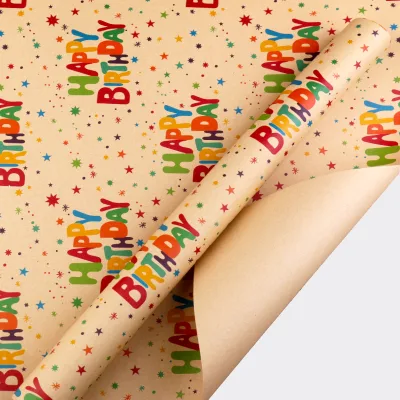
Eco-Friendly Customized Biodegradable Straw Wrapping Paper for Sustainable Packaging
$1480.00 - $1500.00
MOQ: 5 Tons




Comprehensive Sourcing Guide
Strategic Sourcing Guide for Eco-Friendly Spun-Bonded Polyester Wrapping Paper
Understanding Material Specifications and Variability
When sourcing eco-friendly spun-bonded polyester wrapping paper, buyers must first navigate the complex landscape of product attributes, as the term "wrapping paper" in industrial contexts often encompasses a diverse range of materials including kraft paper, stretch films, and specialized coatings. The supplied data indicates a significant divergence in material composition, with observed listings featuring Polyvinyl Chloride (PVC), Polyethylene (PE), and Kraft Paper. While the core keyword specifies spun-bonded polyester, the available market data highlights that many suppliers offer alternatives like PE or PVC films, which may serve similar functional roles in gift packaging but differ fundamentally in environmental impact and physical properties.
Buyers must rigorously verify the fiber composition of the spun-bonded polyester against the listed attributes. The data shows a wide spectrum of physical specifications that are critical for procurement decisions. For instance, width dimensions observed in the market range from 17mm to 40mm, while length specifications extend significantly from 5,000 to 7,000 meters. This variation suggests that the product is often sold in continuous rolls rather than discrete sheets, a format common for industrial wrapping applications. Thickness is another critical variable, with observed values ranging between 24 and 40 GSM (grams per square meter). This range indicates a material that can be engineered for both lightweight, flexible applications and more robust, durable packaging needs.
Furthermore, the surface finish and transparency are key differentiators. The market data reveals products described as either transparent, translucent, or opaque, with hardness levels varying from soft to rigid. Some listings specify a "Plain" or "Lines" texture for the surface, while others indicate a "Coated" process. These attributes directly influence the suitability of the material for specific end-uses, such as gift wrapping where aesthetics are paramount, or industrial shipping where moisture resistance and tensile strength are prioritized. Buyers should not assume that a product labeled as "wrapping paper" possesses the specific spun-bonded polyester characteristics required for their sustainability goals without explicit verification of the fiber content and manufacturing process.
Compliance, Certification, and Environmental Standards
The "eco-friendly" designation in the wrapping paper market is a critical compliance factor that requires careful scrutiny. While the provided context includes a low-confidence background reference to FSC (Forest Stewardship Council) certification, it is essential to note that this certification is primarily associated with wood-based products like kraft paper rather than synthetic polymers like polyester or PE. Consequently, buyers should not rely on the mere presence of an FSC reference to validate the environmental credentials of a spun-bonded polyester product. Instead, the focus must shift to verifying specific environmental standards and certifications relevant to synthetic fibers.
The data indicates that some products adhere to specific standards, such as "27" or "51*75cm," which may refer to internal quality benchmarks or dimensional tolerances rather than environmental compliance. Additionally, the presence of attributes like "Moisture Proof" and "Communicable" suggests that some listed products are designed for specific functional challenges, but these do not inherently confirm eco-friendly status. Buyers must request documentation regarding the recyclability of the spun-bonded polyester, the presence of bio-based additives, or adherence to global chemical regulations such as REACH or RoHS, which are standard for polymer-based packaging.
It is also vital to distinguish between the material's origin and its certification status. The data points to origins in China, specifically Zhejiang and Qingdao, which are major manufacturing hubs. While these regions have robust supply chains, the environmental regulations and enforcement can vary. Buyers should verify if the supplier holds valid ISO 14001 certification for environmental management systems. Furthermore, the "Ash(%)" specification observed in the data, ranging from 8-16%, is a technical metric often used in paper and fiber analysis to determine inorganic content. In the context of eco-friendly materials, a lower ash content might indicate a higher purity of organic fibers, but for synthetic polyester, this metric requires a different interpretation regarding filler content and potential environmental impact.
Cost Drivers and Pricing Dynamics
The pricing structure for eco-friendly spun-bonded polyester wrapping paper is influenced by a multitude of factors, including raw material costs, production complexity, and order volume. The observed price range in the market spans from $0.01 to $1,800, a disparity that reflects the difference between small sample units and bulk industrial shipments. This wide range underscores the importance of defining the procurement scale clearly. For small orders, the unit cost may appear high due to setup fees and minimum order quantities (MOQs), whereas bulk purchases benefit from economies of scale.
The MOQ (Minimum Order Quantity) is a significant cost driver, with observed values ranging from 1 to 100,000 units. Specific listings indicate an MOQ of 5,000 pieces, which suggests that buyers must plan their inventory and cash flow accordingly. Suppliers often offer "Small Orders: Accepted," but this may come with a premium price or longer lead times. The lead time itself is another variable affecting total cost of ownership, with sample lead times ranging from 3 to 5 days and product lead times from 10 to 15 days. These timelines can fluctuate based on raw material availability and production capacity.
Additionally, the complexity of the product specifications drives cost. Customization options are listed as "Available," which implies that tailored dimensions, colors, or coatings will incur additional charges. The packing method, whether "11-9 bobbins per carton" or "on pallet," also impacts logistics costs. Products requiring specialized shipping, such as those labeled "Ship" or "Shipping," may involve higher freight charges depending on the weight and volume. Buyers should analyze the total landed cost, including packaging, shipping, and potential tariffs, rather than focusing solely on the unit price. The "Brand Name" variations, such as "Forest," "Coffe Packaging," and "HED," may also indicate premium branding that influences pricing, though this should be weighed against the actual material specifications.
Typical Applications and Industrial Use Cases
The versatility of spun-bonded polyester wrapping paper allows it to serve a wide array of industrial and commercial applications. The data highlights specific use cases, such as "Gift & Craft" and "Gift Packaging," indicating that the material is frequently utilized for aesthetic and protective purposes in consumer-facing sectors. The "Type" attribute, which includes "Stretch Film" and "Shrink Film," suggests that the material can be adapted for securing pallets, bundling items, or wrapping irregular shapes, making it suitable for logistics and warehousing operations.
For gift packaging, the material's transparency and hardness are crucial. Products described as "Transparent" or "Translucent" with "Soft" hardness are ideal for showcasing the contents of a gift while providing a protective barrier. Conversely, "Opaque" and "Rigid" variants may be better suited for structural packaging or applications requiring a premium, matte finish. The "Coated" process mentioned in the data suggests that some products offer enhanced surface properties, such as improved printability or resistance to moisture, which is essential for outdoor or humid environments.
The "Industrial Use" category further expands the potential applications. The "Moisture Proof" feature is particularly valuable for protecting goods during transit, especially in regions with high humidity or for products sensitive to water damage. The "MD Tensile Strength (Kn/M)" specification, observed to be greater than or equal to 1.0, indicates that the material possesses sufficient mechanical strength to withstand tension during stretching or wrapping processes. This makes it a viable alternative to traditional plastic films for heavy-duty packaging. Buyers should match the specific application requirements, such as the need for "Communicable" properties or specific dimensional standards like "5858cm" or "5070cm," to ensure the selected material performs optimally in its intended environment.
Supplier Evaluation and Selection Criteria
Selecting the right supplier for eco-friendly spun-bonded polyester wrapping paper requires a multi-faceted evaluation strategy. The data indicates that suppliers are located primarily in China, with specific mentions of Zhejiang and Qingdao. While these regions are known for manufacturing capabilities, buyers must verify the supplier's capacity to meet specific quality and sustainability standards. The "OEM/ODM: Accept" attribute suggests that many suppliers are willing to customize products, which is a positive sign for buyers with unique requirements. However, this also necessitates a thorough review of the supplier's design and engineering capabilities.
Buyers should prioritize suppliers who can provide detailed technical data sheets that align with the observed specifications, such as the "Thickness" of 24-40GSM or the "Width" of 17-40mm. The "Model Number" variations, including "Straw Wrapper," "SHECAN," "Z256," and "FPG231211003-#3310," indicate a diverse product portfolio. Buyers should ensure that the specific model number corresponds to the exact material composition and performance characteristics required. Additionally, the "Brand Name" diversity, including "Forest" and "HED," suggests that some suppliers may operate under multiple brands or private labels, which could complicate quality consistency.
Quality control is another critical factor. The "Sample Lead Time" of 3-5 days allows buyers to request and evaluate samples before committing to a large order. This is an essential step in verifying the "Hardness," "Transparency," and "Coating" attributes. Buyers should also assess the supplier's responsiveness to "Small Orders" and their ability to handle "Customization" requests. The "Product Lead Time" of 10-15 days provides a baseline for production scheduling, but buyers should confirm if this timeline is consistent or if it varies based on order volume or material availability.
Quality Control and Performance Verification
Ensuring the quality of eco-friendly spun-bonded polyester wrapping paper involves rigorous testing and verification of key performance indicators. The data provides several technical metrics that serve as benchmarks for quality assessment. The "MD Tensile Strength (Kn/M)" of ≥1.0 is a critical parameter for ensuring the material can withstand the mechanical stresses of wrapping and shipping without tearing. Buyers should request independent test reports to verify this claim, as tensile strength can vary significantly between batches.
The "Ash(%)" content, ranging from 8-16%, is another important quality metric. In the context of paper and fiber products, ash content can indicate the presence of fillers or inorganic additives. For eco-friendly materials, buyers should investigate the source and type of these additives to ensure they do not compromise the material's biodegradability or recyclability. The "Coating" process, whether applied or absent, also affects the material's performance. Buyers should verify the durability of the coating, its adhesion to the substrate, and its resistance to environmental factors such as moisture and UV light.
Furthermore, the "Packing" specifications, such as "11-9 bobbins Per Carton" or "on Pallet," are indicative of the supplier's attention to detail in logistics and product protection. Proper packing ensures that the material arrives in pristine condition, free from damage or contamination. Buyers should inspect the packing method to ensure it aligns with their storage and handling requirements. The "Standard" attributes, such as "27" or "big," may refer to internal quality grades or dimensional tolerances. Buyers should clarify these standards with the supplier to ensure they meet the necessary industry requirements.
Long-Term Procurement and Sustainability Considerations
Sourcing eco-friendly spun-bonded polyester wrapping paper is not just a one-time transaction but a long-term strategic decision that impacts a company's sustainability goals and supply chain resilience. The "Customization: Available" attribute highlights the potential for ongoing collaboration with suppliers to develop innovative solutions that align with evolving environmental standards. Buyers should establish long-term partnerships with suppliers who demonstrate a commitment to sustainability, such as those investing in renewable energy or waste reduction technologies.
The "Lead Time" variability, ranging from 3-5 days for samples to 10-15 days for production, suggests that buyers need to maintain a flexible inventory strategy. Long-term contracts with clear lead time commitments can help mitigate supply chain disruptions. Additionally, the "MOQ" flexibility, with options for small orders, allows buyers to test new materials and adjust their procurement strategies without significant financial risk.
Sustainability considerations extend beyond the material itself to the entire lifecycle of the product. Buyers should evaluate the supplier's end-of-life management practices, including recycling programs or take-back schemes. The "Material" composition, whether PE, PVC, or Kraft Paper, determines the environmental impact of the product after use. For spun-bonded polyester, buyers should prioritize suppliers who offer recycled content or bio-based alternatives. The "Brand Name" and "Model Number" consistency can also play a role in long-term procurement, as maintaining a stable product line simplifies quality control and regulatory compliance.
In conclusion, sourcing eco-friendly spun-bonded polyester wrapping paper requires a comprehensive approach that balances technical specifications, compliance, cost, and supplier reliability. By carefully evaluating the provided data and conducting thorough due diligence, buyers can identify suppliers who meet their specific needs while contributing to a more sustainable future. The diverse range of attributes and specifications observed in the market underscores the importance of a tailored procurement strategy that aligns with the unique requirements of each application.
FAQs
What material options are available for wrapping paper?
The market offers PVC, PE, and Kraft Paper options rather than just spun-bonded polyester. Buyers must verify fiber composition against listed attributes to ensure the material meets specific sustainability goals and functional requirements for gift packaging.
How wide and long are the typical product rolls?
Observed widths range from 17 to 40mm while lengths extend from 5000 to 7000 meters. This variation indicates the product is often sold in continuous rolls suitable for industrial wrapping applications rather than discrete sheets.
What is the minimum order quantity for these products?
Minimum order quantities range from 1 to 100,000 units with specific listings showing an MOQ of 5000 pieces. Buyers must plan inventory and cash flow accordingly as small orders may incur premium pricing or longer lead times.
Can suppliers provide customized wrapping paper specifications?
Customization is available for tailored dimensions, colors, or coatings which may incur additional charges. Suppliers accept OEM and ODM requests, allowing buyers to specify unique requirements like specific widths or transparency levels for their needs.
Where are the primary manufacturing locations for this product?
Products originate from China, specifically Zhejiang and Qingdao, which are major manufacturing hubs. Buyers should verify if these suppliers hold valid environmental certifications like ISO 14001 given the varying regional regulations and enforcement capabilities.
What are the typical lead times for samples and bulk orders?
Sample lead times range from 3 to 5 days while product lead times span 10 to 15 days. These timelines can fluctuate based on raw material availability and production capacity, so buyers should confirm consistency before committing to large orders.
How does the tensile strength affect product performance?
The MD Tensile Strength is observed to be greater than or equal to 1.0 Kn/M. This mechanical strength ensures the material can withstand tension during stretching or wrapping processes without tearing, making it viable for heavy-duty packaging.